Shopping cart
Your cart empty!

Your cart empty!

Join 10k+ people to get notified about new posts, news and tips.
Do not worry we don't spam!
Terms of use dolor sit amet consectetur, adipisicing elit. Recusandae provident ullam aperiam quo ad non corrupti sit vel quam repellat ipsa quod sed, repellendus adipisci, ducimus ea modi odio assumenda.
Lorem ipsum dolor sit amet consectetur adipisicing elit. Sequi, cum esse possimus officiis amet ea voluptatibus libero! Dolorum assumenda esse, deserunt ipsum ad iusto! Praesentium error nobis tenetur at, quis nostrum facere excepturi architecto totam.
Lorem ipsum dolor sit amet consectetur adipisicing elit. Inventore, soluta alias eaque modi ipsum sint iusto fugiat vero velit rerum.
Sequi, cum esse possimus officiis amet ea voluptatibus libero! Dolorum assumenda esse, deserunt ipsum ad iusto! Praesentium error nobis tenetur at, quis nostrum facere excepturi architecto totam.
Lorem ipsum dolor sit amet consectetur adipisicing elit. Inventore, soluta alias eaque modi ipsum sint iusto fugiat vero velit rerum.
Dolor sit amet consectetur adipisicing elit. Sequi, cum esse possimus officiis amet ea voluptatibus libero! Dolorum assumenda esse, deserunt ipsum ad iusto! Praesentium error nobis tenetur at, quis nostrum facere excepturi architecto totam.
Lorem ipsum dolor sit amet consectetur adipisicing elit. Inventore, soluta alias eaque modi ipsum sint iusto fugiat vero velit rerum.
Sit amet consectetur adipisicing elit. Sequi, cum esse possimus officiis amet ea voluptatibus libero! Dolorum assumenda esse, deserunt ipsum ad iusto! Praesentium error nobis tenetur at, quis nostrum facere excepturi architecto totam.
Lorem ipsum dolor sit amet consectetur adipisicing elit. Inventore, soluta alias eaque modi ipsum sint iusto fugiat vero velit rerum.
Do you agree to our terms? Sign up
The blue economy is one of the most important drivers of economic development in Zanzibar because it uses ocean resources sustainably to create jobs, increase income, and protect the marine environment. According to the United Nations Development Programme (UNDP),This idea has become the foundation of Zanzibar’s development strategy.
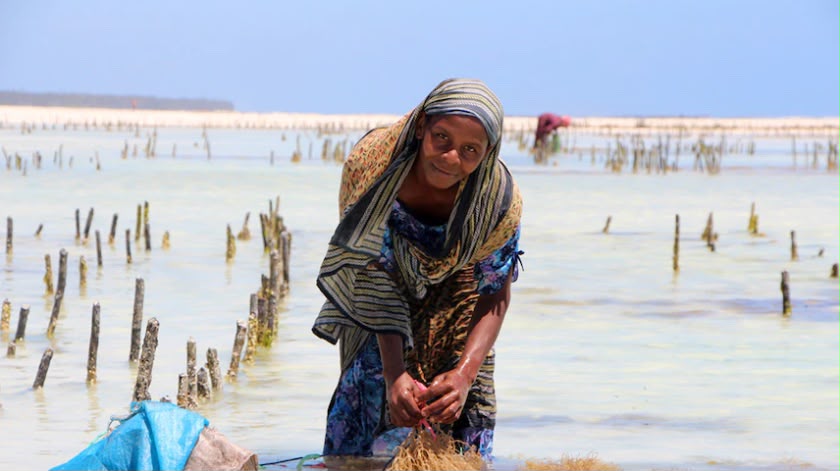
I have met Rehema, a young girl from a coastal village in Zanzibar, learned about the blue economy at school. She realized that almost every family in her village depended on the ocean. Her father earned a living as a fisherman, her mother cultivated seaweed, and her older brother worked as a tour guide for visitors who came to enjoy Zanzibar’s beaches and coral reefs.
Her teacher explained that the blue economy includes fisheries, tourism, seaweed farming, marine transport, and marine conservation. The World Bank explains this by stating, “The blue economy is the sustainable use of ocean resources for economic growth, improved livelihoods and jobs while preserving the health of ocean ecosystems.” This means that economic growth should go hand in hand with protecting the sea for future generations.
Rehema was surprised to learn how much the blue economy contributes to Zanzibar’s economy From her teacher.
The blue economy is an important pillar of Zanzibar’s economy Example,In Tourism as the largest sector, contributing Over 30% of Zanzibar’s Gross Domestic Product (GDP).
Fishing is also an important part of the blue economy in Zanzibar and In 2025, the fisheries sector contributed 15.1% of Zanzibar’s GDP, producing about more than 80,000 tonnes of fish valued at approximatelyTZS 569.08 billion,also Up to 80% of the rural population in Zanzibar directly depends on fishing and seaweed farming for their daily income and subsistence
The teacher also explained that the fishing industry directly employs more than 200,000 fishers, while Seaweed farming is another important activity, directly employing about more than 100,000 farmers, most of whom are women. In fact, seaweed is one of Zanzibar’s leading export products and provides income for thousands of coastal families.
The Food and Agriculture Organization (FAO) emphasizes the importance of protecting these resources by stating, “Sustainable fisheries and aquaculture are essential for food security, nutrition and livelihoods.” This is why communities in Zanzibar protect coral reefs, mangrove forests, and marine parks. Healthy marine ecosystems support fish breeding, reduce coastal erosion, and attract tourists from around the world.
As Rehema walked along the beach, she understood that protecting the ocean was not only good for nature but also for the economy.
The Revolutionary Government of Zanzibar recognizes this by stating that “The Blue Economy is a key driver for sustainable economic development and improved livelihoods in Zanzibar.”
Inspired by this lesson, Rehema decided that she wanted to become a marine conservation officer to help protect the ocean while supporting the people who depend on it.
In conclusion, the blue economy has transformed Zanzibar by creating employment, increasing income, supporting fisheries, promoting tourism, empowering women through seaweed farming, and protecting marine ecosystems. By balancing economic development with environmental conservation, Zanzibar is ensuring that future generations will continue to benefit from the rich resources of the Indian Ocean.
By: Mackriner Siyovelwa